
Like any other utopian movement, environmentalist groups use a variety of methods in order to make the case for their causes. In addition to using regular advertisements and political rallies, many will use shocking or provoking ads in order to get their point across. This includes using scare tactics in order to convince people to boycott products or support efforts of environmentalist groups.
One unique wing of the environmentalist movement is the slow food effort. It is essentially geared toward emphasizing eating clean food that is locally grown utilizing techniques that have a positive influence on local communities while benefiting biodiversity. One slow food chapter’s website further describes the rationale for the movement’s existence:
Around 30% of global greenhouse gas emissions come from agriculture and food production. With increased economic growth, the combination of transporting food products, refrigeration, consumer behavior and waste management are also increasing emissions rapidly. Some of the factors that impact climate include the position of products in the food chain, the energy used during the process, the production method, either organically or with chemicals, and how far the food is transported to the dinner table.
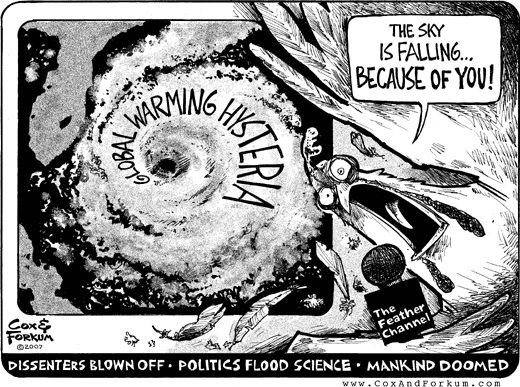
Now the guilt of the human carbon footprint that contributes to global warming and climate change (meaning you) will be extended to food production too. With all of this in mind, now an effort is afoot to adopt a similar campaign for the practice of medicine. However and so far, the difference between slow food and slow medicine is their context. The intent of the two doctors who thought up the idea of slow medicine is to take better care of their patients, taking the time to ensure patients are treated right the first time.
However, the fallacy of slow medicine is the concept and not the content. If doctors want to take more time to treat patients rather than treating them like they are on a conveyor belt, good for them! However, taking an idea from a movement hostile to human existence is not a good idea and could hinder a movement more than help. It is my hope that down the line similar logic from slow food does not filter into slow medicine. Imagine, if you will, the can of worms opened if the case is made that production and delivery of medicine’s carbon footprint is too high if greens are successful once food production’s carbon footprint is reduced. Ugh!
 Green Jihad