This is concerning to say the least.
In late May, Sarasota County, Florida, health officials confirmed they had identified a case of locally transmitted malaria. In mid-June, they confirmed the second. On June 23, Texas joined in: its state health department announced it had confirmed a case of local malaria transmission in Cameron County.
This is all highly unusual. The US hasn’t documented a locally acquired malaria case in 20 years.
Although about 2,000 people infected with malaria turn up in the US health care system every year, those cases are all linked to travel outside the US. Neither those involved in the Florida cases nor the Texas case had traveled. That means in both states, the infection was acquired within US borders.
Experts say the three cases shouldn’t warrant panic about widespread malaria transmission in the US. But it does warrant asking some questions, and being wary of the threat of more local transmission. Mosquitoes can infect multiple people before a full-on outbreak is even identified — so more cases could be out there.
Malaria isn’t widespread yet, but the fact that it is being found in places like Florida and Texas are concerning since they are hubs of large amounts of illegal immigrants. Some come by the sea (Florida) while others come by land (Texas).
No doubt this is the result of Biden’s open border policy since Michael Yon alleges the illegals are not only being bused in but are not being screened for illnesses, much less criminal records. Until this trend is reversed, it is best to not only get your childhood vaccinations updated, but also learn the sings and symptoms of diseases that do not have vaccinations available (yet) including consider aims or means of how to defend yourself.
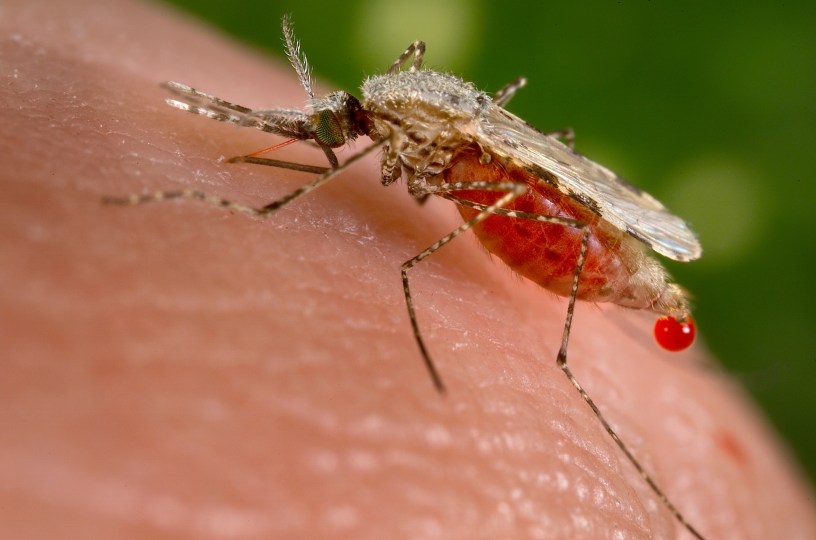
PHOTO CREDIT: An Anopheles stephensi mosquito shortly after obtaining blood from a human (the droplet of blood is expelled as a surplus). This mosquito is a vector of malaria, and mosquito control is an effective way of reducing its incidence. By Jim Gathany – This media comes from the Centers for Disease Control and Prevention’s Public Health Image Library (PHIL), with identification number #5814.Note: Not all PHIL images are public domain; be sure to check copyright status and credit authors and content providers.العربية | Deutsch | English | македонски | slovenščina | +/−, Public Domain, https://commons.wikimedia.org/w/index.php?curid=799284
 Green Jihad