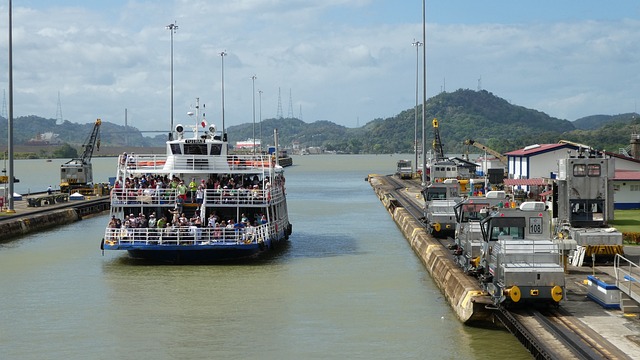
Gotta love that natural variability!
The climate phenomenon known as El Nino — and not climate change — was a key driver in low rainfall that disrupted shipping at the Panama Canal last year, scientists said Wednesday.
A team of international scientists found that El Nino — a natural warming of the central Pacific that changes weather worldwide — doubled the likelihood of the low precipitation Panama received during last year’s rainy season. That dryness reduced water levels at the reservoir that feeds freshwater to the Panama Canal and provides drinking water for more than half of the Central American country.
Human-caused climate change was not a primary driver of the Central American country’s unusually dry monsoon season, the World Weather Attribution group concluded, after comparing the rainfall levels to climate models for a simulated world without current warming.
It was just four months ago that media elites proclaimed that the Panama canal was drying up and the coming economic catastrophe surrounding it was our fault despite the fact that droughts have occurred there before. Then a study was recently released based on actual scientific research (emphasis mine).
…To test whether climate change had a role, the team of scientists analyzed weather data against computer simulations precise enough to capture precipitation in the region. Such models simulate a world without the current 1.2 degrees Celsius (2.2 degrees Fahrenheit) of warming since preindustrial times, and see how likely the lack of rainfall would be in a world without fossil fuel-charged warming.
The climate models did not show a trend similar to the drying that Panama experienced last year. In fact, many models show a wetter trend in the region due to climate change from carbon dioxide and methane emissions produced by the burning of coal, oil and natural gas.
Meanwhile, the analysis showed that El Niño reduced the 2023 rainfall by about 8%, and that it’s unlikely Panama would have experienced such a dry rainy season without the influence of the weather phenomenon. The researchers said increased demand for water in the region worsened the shortfall.
The group used more than 140 years of rainfall records collected from 65 weather stations—a “statistician’s dream,” said Clair Barnes, a researcher at Imperial College of London and one of the study’s authors.
Climate alarmists would rather sow panic for clicks or publicity and would obviously prefer people live in fear. Panama’s population was much smaller in previous years and it did not help that 50 million gallons of freshwater per large container ship was used to transit the locks.
PHOTO CREDIT: Pixabay
 Green Jihad