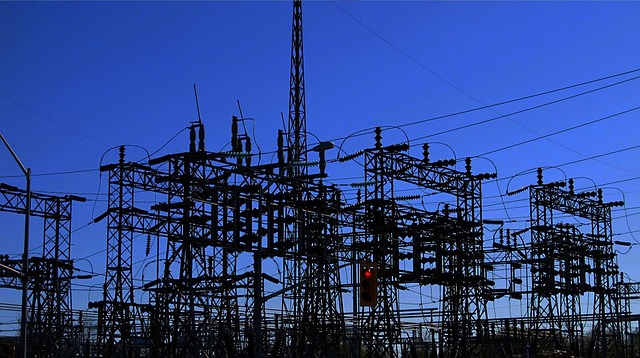
Major global asset managers, like BlackRock and Blackstone, are seeking to acquire U.S. power utilities, a trend some industry experts caution could hurt consumers, increase electricity prices, and push a climate-focused energy agenda.
For instance, in January 2024, Blackstone purchased a 20% stake in Northern Indiana Public Service Company for $2.1 billion, after which the utility announced plans to increase green energy production. In January 2025, Blackstone acquired Potomac Energy Center, a Virginia natural-gas power plant, for $1 billion, citing its role in supporting data centers and the AI revolution.
In March 2025, Wisconsin’s Public Service Commission approved the acquisition of Superior Water, Light and Power by a BlackRock subsidiary, Global Infrastructure Partners, and the Canada Pension Plan Investment Board, with BlackRock securing a 60% majority stake; the latter is linked to Canada’s socialist government.
Last month, Blackstone bought Pennsylvania’s Hill Top Energy Center, another natural-gas plant, for $1 billion, with executives emphasizing its importance to the AI-driven electricity infrastructure. This seems to be only the start.
Blackstone is currently pursuing regulatory approval to acquire two utilities: Public Service Company of New Mexico, the state’s largest electricity provider based in Albuquerque, and Texas New Mexico Power Co., based in Lewisville, Texas.
BlackRock and the Canada Pension Plan Investment Board’s bid to acquire the parent company of a Minnesota utility encountered obstacles but, unfortunately, was approved. As a result, BlackRock now holds a majority stake in the utility.
Critics of these acquisitions express immediate, practical concerns, fearing higher energy costs and declining service quality. These fears are not unfounded.
BlackRock and Blackstone have demonstrated a willingness to impose Leftist values after acquiring significant company stakes, integrating environmental, social, and governance (ESG) principles into their investment strategies and promoting LGBTQ initiatives. BlackRock CEO Larry Fink has even boasted about driving behavioral changes, stating during a 2017 New York Times discussion, Behaviors must change, and we’re asking companies to do this. At BlackRock, we enforce behavioral changes.
BlackRock and Blackstone are not just seeking control over utilities that supply power to households but are also heavily investing in real estate through subsidiaries, acquiring commercial properties, farmland, timberland, and single-family homes. Given their history, these firms cannot be relied upon to prioritize the needs of ordinary people and will very likely implement their ESG schemes using the utility companies they buy as a means to do so. Informed citizens should educate their communities about the true intentions of these companies and work to stop their efforts.
PHOTO CREDIT: Pixabay
 Green Jihad