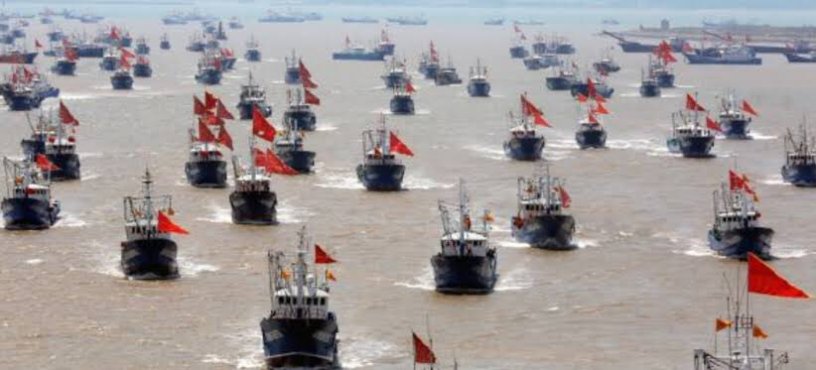
China has over half a million fishing commercial fishing vessels and their seafood fleets continue to pose a major threat to other nation’s sea life. Recent studies reveal environmental harm in West African regions, subtle coercive tactics in Asian seas, and persistent risks to South American maritime areas.
In fairness, China is not the only country that engages in illegal or questionable fishing efforts. However, they still continue to despite even having signed off on a treaty in April to end the practices. The situation has worsened to such an extent that a recent Atlantic Council report cautioned about Chinese trawlers, which frequently engage in illegal operations within restricted coastal zones along Africa’s West Coast, leading to drastic reductions in fish populations, economic harm to local communities, and deterioration of coastal water quality.
Not surprisingly, environmentalist groups (like Greenpeace) say and do nothing. Including when Chinese vessels dump human waste into the sea.
It appears that China’s trawlers form a key element of its maritime gray-zone strategy in the area, deploying civilian-flagged fishing boats to conduct intimidation tactics, ramming actions, and blocking maneuvers around reefs and shoals contested by Japan along with Southeast Asian nations including Taiwan.
South American nations try to address the problems Middle Kingdom’s fishing fleets pose, but their efforts can only do so much.
According to reports, Japan has offered assistance to South American countries in preventing Chinese fishing fleets from depleting their marine areas, with initiatives that includes financing for drones and patrol vessels. Like many Asian countries, seafood is a large component of Chinese cuisine. The sinister motivation for this is by depleting countries of their seafood stocks, it forces them to be dependent on foreign trade with China for seafood supplies.
PHOTO CREDIT: X
 Green Jihad