So much for the future being electric.
With its long-planned shift to a zero-emissions bus fleet slowed by underperforming electric technology, the MTA plans to order 650 new coaches that rely on compressed natural gas.
The MTA committed nearly a decade ago to having its entire fleet of close to 6,000 buses be emissions-free by 2040, but officials on Thursday said the transportation authority is instead seeking proposals from manufacturers to produce low-emissions alternatives to diesel.
Officials tied the release of a request for proposals to the “Next Stop: Fast Buses, Better Service” plan unveiled in July by Gov. Kathy Hochul and Mayor Zohran Mamdani, as the head of the MTA has repeatedly acknowledged that electric-bus technology is “still immature.”
Like any typical socialist, Zohran Mamdani backs zero-emission vehicles. The trouble is that a large part of his public image rests on getting buses running on time and in good working order. Spending enormous sums on articulated electric buses that fail to perform as promised is therefore a serious liability. The broader plan to convert the city’s entire bus fleet to EVs is estimated at $12 billion and would consume enough electricity to power 200,000 homes, as The City Reporter has pointed out—a costly double hit.
The city is now reversing course and returning to compressed natural gas, buying 650 new CNG buses to replace the 620 CNG vehicles purchased in 2013. The City Reporter describes the purchase as part of the MTA’s largest single upgrade to its fleet since 2013. Those who should have seen the problems coming are now treating the shift as a victory.
Modern, reliable buses can spend more time on the road and less time in the shop than the old vehicles they will replace, a win for riders who depend on frequent, reliable service to get around, New York Gov. Kathy Hochul said in a statement quoted by The City Reporter.
The proof that electric buses don’t work was right in front of New York politico’s faces.
Two years ago, Bethlehem Central School District reported a problem with one of its buses breaking down just for it being driven over a pot hole, and that is on top of five of the seven buses the school district bought were out of service. Worst of all, not only were most of the district’s buses the subject of the recall by the National Highway Traffic Safety Administration, but a number of municipalities also reported problems with electric buses too.
Earlier in February, a driver in Winthrop, Maine, suddenly lost power steering and braking, causing him to run into a snowbank to stop the vehicle.
Several municipalities nationwide, including Asheville, N.C., Colorado Springs, Colo., and Philadelphia have reported issues with transit e-buses. In Philadelphia, a fleet of 25 e-buses that were debuted during the 2019 Democratic presidential convention are unused, due to breakdowns and lack of parts, according to news reports.
The city’s whole electric-vehicle program looks a lot like a lucrative scheme that lets politicians, bureaucrats, and their favored industries siphon taxpayer money at a massive scale.
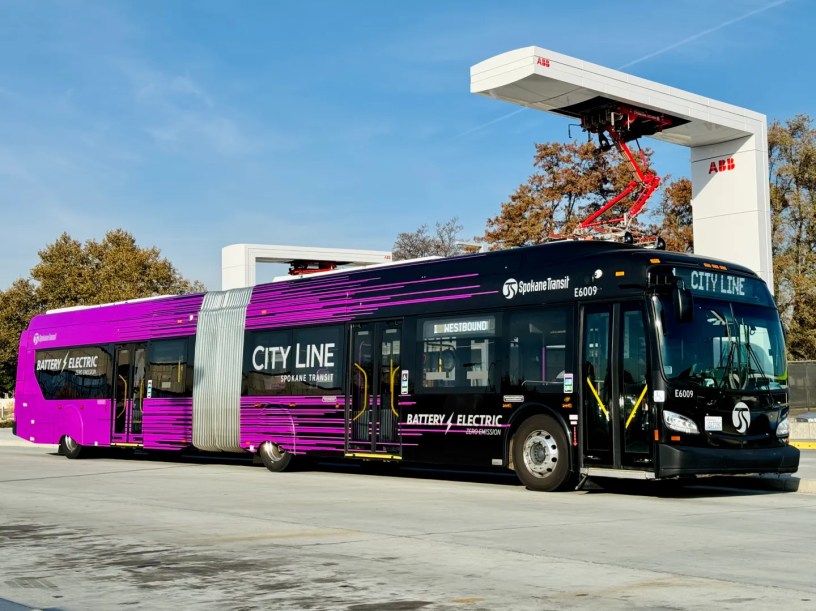
PHOTO CREDIT: Spokane Transit Authority City Line 60-foot articulating New Flyer Xcelsior CHARGE battery electric bus charging via overhead ABB pantograph – By JTRamsey – Own work, CC BY-SA 4.0, https://commons.wikimedia.org/w/index.php?curid=139916474


Rio de Janeiro had electric trams in the 60s, but paving over high-maintenance cobblestones to handle traffic made the tracks useless. So the monopoly ordered Italian buses to use the same overhead grid. Bumpy streets caused the power connections to jump off the conductors, so the whole thing proved a disaster. Regular buses replaced tracks and power grids.
LikeLike