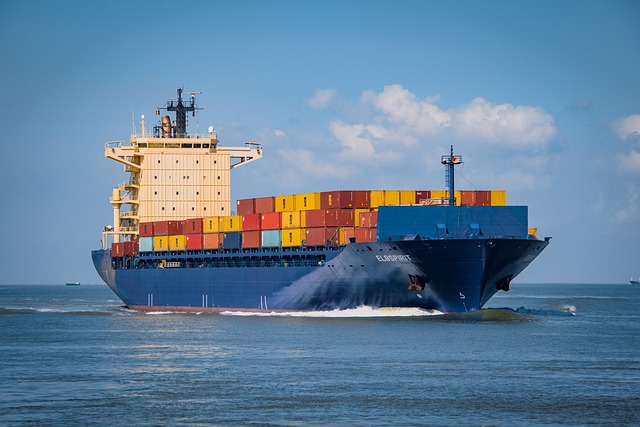
The International Maritime Organization is convening this week to finalize a proposal, supported by nations in April, that would impose a tax on shipping emissions.
This U.N. agency establishes mandatory rules for the global maritime sector. However, according to E&E News, several Trump officials have criticized the plan as a European-driven neocolonial push for global climate rules and are pressuring countries to oppose it by threatening tariffs and trade restrictions.
So far, the carbon tax proposal might actually pass but the US is making a last minute push to change the rules to adopt the measure. What’s worse is that this would be the first time a global body would issue mandatory, global rules.
What is of concern is that the UN regulations would discourage the use of liquid natural gas that the shipping industry uses on some of its vessels. Additionally, global shipping only contributes about 3% of the world’s carbon emissions. However, the IMO’s rules will negatively impact the industry and that may one of the reasons why the global body’s plan is being considered.
While the Trump administration’s claims that the new regulations would drive up shipping costs that will also affect consumers is weak (largely due to Trump’s tariffs), E&E News says one argument that might stick is that China would ultimately benefit from the IMO’s scheme since the Middle Kingdom is the world’s largest ship builder.
Though climate groups think the IMO’s shipping rules will pass, E&E News reveals there is one factor that might ultimately hinder their adoption:
For the agreement to be adopted, two-thirds of the countries present need to vote in its favor. Over the following months, before the agreement enters into force, those countries can choose to opt out. The IMO considers countries that don’t actively opt out to remain behind the agreement.
The U.S., however, is pushing for “explicit” adoption, where countries will need to come back and voice their support for the agreement before it can take effect.
“That is the Achilles heel,” said Faig Abbasov, shipping program director for Brussels-based clean energy advocacy group Transport & Environment. The change would give the U.S. time, he said, to bully enough countries into not sending their acceptance to the IMO.
In addition to Despite Trump’s opposition, fortunately, shipping companies are raising concerns, including demanding changes to the IMO’s proposal. It is unknown if the U.S.’s efforts will work (hopefully they will), but the vote is tomorrow and this will be a nail-biter for sure.
It is truly ironic that the world’s largest polluter, China, will ultimately benefit from the UN’s carbon tax scheme. But that also may be the point.
PHOTO CREDIT: Pixabay
 Green Jihad