Nearly six years after its initial proposal, the Horse Heaven Hills wind and solar project returned to court when the Washington Supreme Court heard arguments concerning one of the state’s most significant clean energy initiatives ever considered. Opposing groups—including Tri-Cities CARES, Benton County, and the Yakama Nation—contend that state regulators and former Governor Jay Inslee did not sufficiently address issues related to tribal sovereignty, effects on wildlife, wildfire hazards, visual impacts on communities, and potential reductions in property values.
Proponents, notably Scout Clean Energy based in Colorado, maintain that the proposal was subject to an unusually thorough evaluation process in Washington’s history, producing over 64,000 pages of documentation through extended public hearings, environmental assessments, and intergovernmental consultations. The development companies assert that critics are attempting to halt the project completely rather than work toward meaningful improvements.
The project originally proposed a footprint of approximately 72,500 acres located south of the Tri-Cities, featuring 244 wind turbines alongside large-scale solar installations and battery storage infrastructure. A decision from this case may carry substantial consequences for Washington’s renewable energy targets and the approval process for similar projects across the state.
People were regularly assured that changing to renewables wouldn’t just reduce people’s carbon emissions, but that their utility bills would go down. A similar pitch was made trying to convince people to purchase electric vehicles and, despite warnings and as Germany’s example demonstrates, so-called renewable energy is a fraud.
Hopefully, Washington’s Supreme Court will strike down this latest boondoggle that will be a disaster for the state.
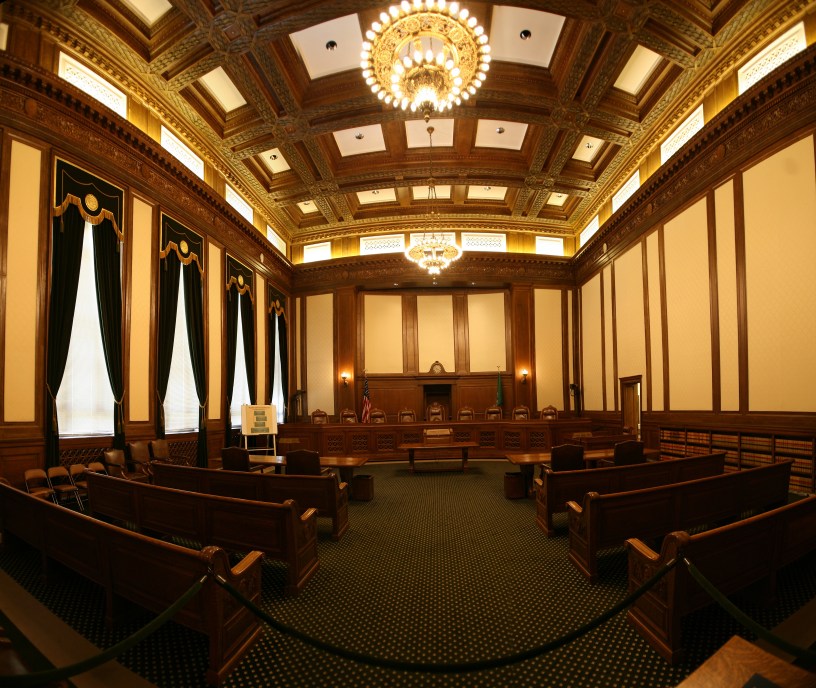
The interior of the Washington State Supreme Court – By I, Cacophony, CC BY-SA 3.0, https://commons.wikimedia.org/w/index.php?curid=2241006


Comments are closed.