Here’s what the media hype drowns out with the Chinese Communist Propaganda.
Several major electric utilities have recently announced that their residential customers will have lower electric bills because of major investments in new power plants and the electric grid, enabled by data centers.
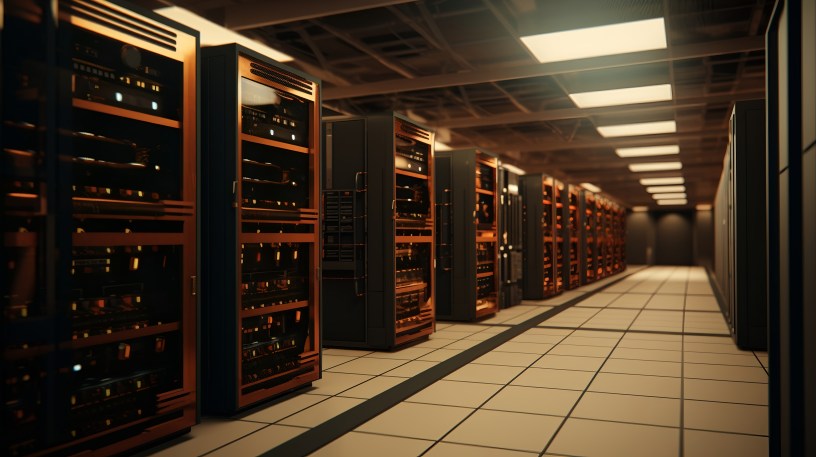
Data centers generally need electricity 24/7 and are willing to pay whatever is necessary to ensure reliable power is always available. That enables more plants to be built and revitalizes our aging transmission grid.
On May 27, the Georgia Public Service Commission (PSC) approved a plan to lower rates by approximately $50 per year for the typical residential customer. Total annual savings will be approximately $285 million.
The massive data centers necessary to power modern artificial intelligence and other computing tasks have sparked significant controversy, driven partly by “Not in my backyard” (NIMBY) opposition. These concerns are not entirely unfounded, as such facilities are often enormous, visually intrusive, and noisy.
Thankfully, this reveals there is an upside: their presence could lead to reduced base utility rates for local residents and businesses. Best of all, it’s happening elsewhere too.
On March 5, Entergy announced, “approximately $5 billion in total savings for 2.3 million customers in Arkansas, Louisiana, and Mississippi because of data center customer agreements in those states.” The savings are over the next 20 years.
Entergy also said the data centers were responsible for “approximately $47 billion in total new investment for communities, thousands of high-tech jobs, millions of dollars in new tax revenues,” and many other benefits.
On February 24, American Electric Power’s Indiana Michigan Power (I&M) company announced it would be filing to reduce base rates, the largest portion of most of its 600,000 customers’ bills, this summer.
Some facilities rely on small modular reactors to generate their own electricity. Though these arrangements don’t necessarily expand the regional grid’s overall generation capacity; instead, they appear to push utility companies to build up capacity based on projected future demands rather than immediate requirements.
Incentives play a crucial role here. As society becomes increasingly dependent on data centers for our AI-driven, internet-based lifestyles—and that trajectory seems inevitable despite any opposition from older generations—demand for these facilities will continue growing. This expansion requires additional generation capacity, which, as observed in certain regions, can actually lower base utility rates for everyone. It serves the interests of both data center operators and utility providers to stay ahead of this demand curve.
Energy remains foundational to everything we do. Regardless of renewable alternatives like solar or wind, what matters most is access to reliable, affordable, and continuous electricity. The good news is that basic economics apply: with rising demand, supply appears poised to grow substantially.
PHOTO CREDIT: Pixabay
 Green Jihad