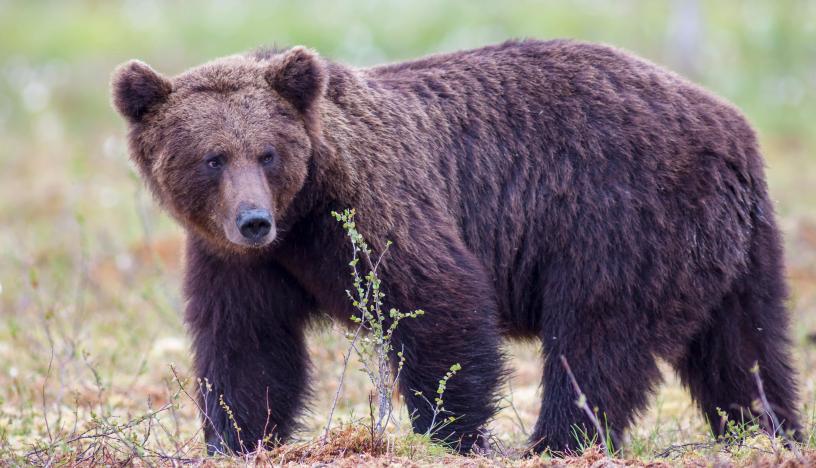
Bear populations have gone up thanks to endangered species protections that environmentalists pushed for.
Peter and Barbie Fons were washing dishes after dinner when they looked up to see a bear in the living room.
“He’s just standing there, you know, on all fours, and he’s got drool coming down,” recalled Peter, 69. “And he walks around the couch and does a big ol’ pee on the floor.”
Barbie hid in a backroom while Peter slammed doors and banged pots and pans to scare off the intruder. The male bear—later identified as a known burglar named Judy—moseyed into a bathroom, put its paws on the counter and sniffed a tube of toothpaste before leaving.
“It smelled like a zoo here for three days,” Peter said. The retired couple was sitting outside under the pines, decompressing over a bottle of Pinot Noir. It was their second bear invasion in a month.
The Wall Street Journal says bears are causing widespread disruption across the U.S., not surprisingly, fueled by a population recovery that stems partly from endangered species protections. In towns and suburban areas, like Lake Tahoe, these animals use their sharp sense of smell to seek out trash bins, vehicles, and residences.
In May, the WSJ reports, officers in Gatlinburg, Tennessee, released a bear that had trapped itself inside a hotel bathroom. In June, a contractor in Steamboat Springs, Colorado, discovered a young bear eating his lunch after opening his truck door. California alone is home to roughly 60,000 of them—three times the population of the 1990s. Activity is especially high along the turquoise waters of Lake Tahoe.
Through Wednesday this week, according to The Journal, South Lake Tahoe police logged 174 bear-related calls, up from 97 during the same timeframe in 2025. These range from bold break-ins to tourists unsettled by a passing bear. While injuries remain uncommon, authorities note up to five attacks per year in the Tahoe area and fear that figure could rise.
Fortunately, President Trump has weakened endangered species protections that, hopefully, will make it easier for people who encounter bears to be able to not only defend themselves but also hunt bears too. The intention is clear and something environmentalists seek to accomplish by doing the same with wolves: expose humans (especially ranchers) to more danger, this time in the form of bear attacks and that includes reducing the food supply since livestock will be slaughtered too.
As opposed to living in Democrat-run municipalities with lax crime policies enabling criminals to prey on innocent victims, environmentalists support endangered species laws in which wild animals, like bears and wolves, are essentially weaponized in order to attack humans and animals used for food, like cattle. The result is another form of anarchotyranny.

