Despite China emitting the highest amount of carbon emissions and nine U.S. states banning gas-powered vehicles by 2035, a new report recently published by Real Clear Energy (RCE) reveals that, on the whole, electric vehicles are worse for the natural and man-made environment than fossil fuel-powered automobiles. According to RCE, the switch to electric-powered vehicles would require a massive increase in mining world-wide, especially when it came to having to extract the appropriate materials for batteries (like graphite and coblat).
…a typical EV battery weighs about 1,000 pounds…That half-ton battery is made from a wide range of minerals including copper, nickel, aluminum, graphite, cobalt, manganese, and of course, lithium. And to get the materials to fabricate that half-ton battery requires digging up and processing some 250 tons of the earth somewhere on the planet…80%–90% of relevant minerals are mined and refined outside the U.S. and E.U. and will be for a long time regardless of subsidies. And, since China refines 50%–90% of the world’s suite of energy minerals for EVs, it’s relevant that its grid is two-thirds coal-fired—and will be for a long time.
When taking into account manufacturing and fueling and compared to a gas-powered vehicle over a ten year period, RCE states an electric vehicle entails a ten-fold greater extraction and handling of materials from the earth, and far, far more acreage of land disturbed and, unfortunately, often polluted….the mines operating and planned can’t supply even a small fraction of the 400% to 7000% increase in demand for minerals that will be needed within a decade to meet the [electric vehicle mandate]. What’s relevant is that the IEA [International Energy Agency] has told us we’ll need hundreds of new mega-mines, and that it takes 10 to 16 years to find, plan and open a new mine.
It will take longer than twelve years to get enough mines in place in order to begin extracting the necessary minerals for electric vehicle battery manufacturing. Electric vehicle car batteries can cost anywhere from $4,000 to $20,000 (depending on the vehicle) and by 2035, it can be reasonably concluded that the necessary rare earth minerals will not be in sufficient supply for battery manufacture. Consequently, the result will be large car battery price increases on top of already expensive price tags. Earlier this year, even The Guardian pointed out that a transition to electric vehicles in the U.S. could require three times as much lithium as is currently produced for the entire global market, causing needless water shortages…and ecosystem destruction.
Real Clear Energy also put to bed the assertions about electric vehicles and carbon emissions too, saying nearly all studies making emissions claims are worse than guesses,” typically cherrypicking “low numbers” for battery size:
A meta-study of 50 different technical studies found the estimates of emissions varied by over 300%. And, worse, that analysis exposed the fact that most emissions claims were based on assuming use of a small 30 kWh battery. That’s one-third the size of batteries actually used in most EVs. Triple the battery size and you triple the upstream emissions – and you triple the demand and thus price-pressure for the minerals.
Transitioning to electric vehicles, the RCE report says, could result in a net increase in global emissions. Who could have predicted that would happen? Mining would not just have to profoundly increase, but so would mining low-grade ores that demand massive outputs of energy and greenhouse gas emissions to extract and prepare:
Geologists have long documented that ore grades have been and will continue declining. That’s because global ore grades are declining – for the non-cognoscenti, that means for each new ton of mineral there’s a steady and unavoidable increase in the quantity of rock dug up and processed. A decrease of just 0.4% in copper ore grade will require seven times more energy to access the copper.
With the even slightest increase in electric vehicle owners on the road would also mean additional strains on the national power grid. Three months ago, CNBC revealed that half of all new cars sold in the U.S. are electric vehicles, that may put a major strain on our nation’s electric grid, an aging system built for a world that runs on fossil fuels.
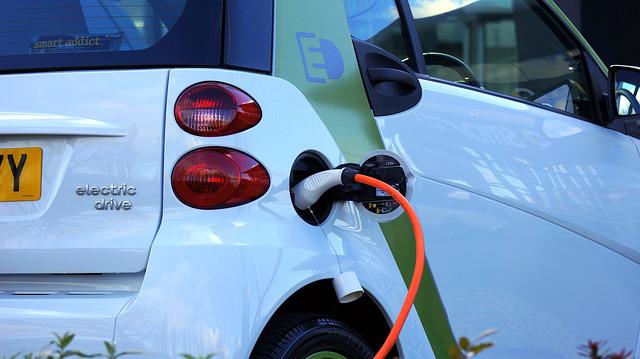
Consider the kinds of problems the power grid would experience by 2035 when all of those nine states have to have electric vehicles available for sale at car dealerships in their respective jurisdictions, and the massive infrastructure needed such as charging stations. Of course there are the long wait times for people to charge their cars and trucks and, RCE points out, that it takes longer to charge an electric vehicle than someone who gases up at the local gas station and there will need to be more charges than fuel pumps too.
As it turns out, during May The Telegraph stated that electric vehicles are heavier than gas-powered ones in which the an electric vehicle batter can weigh up to 1000 pounds. Since electric vehicles will also burden transportation infrastructures, that means there will have to be massive amounts of money expended to upgrade roads and bridges to accommodate them or you can expect frequent disasters like bridge collapses.
So with all of this in mind, environmentalist’s and Biden’s campaigns for electric vehicles are nothing more than a massive wealth transfer scheme to a sector that only became popular for political reasons. Electric vehicles will only benefit wealthy people, including and especially the politically powerful. The rest of us plebs will have to resort to public transportation (like buses or rideshares) while our ability to have our own means of transportation will be destroyed. But, hey, at least our carbon emissions will go down, right?
PHOTO CREDIT: Pixabay
 Green Jihad