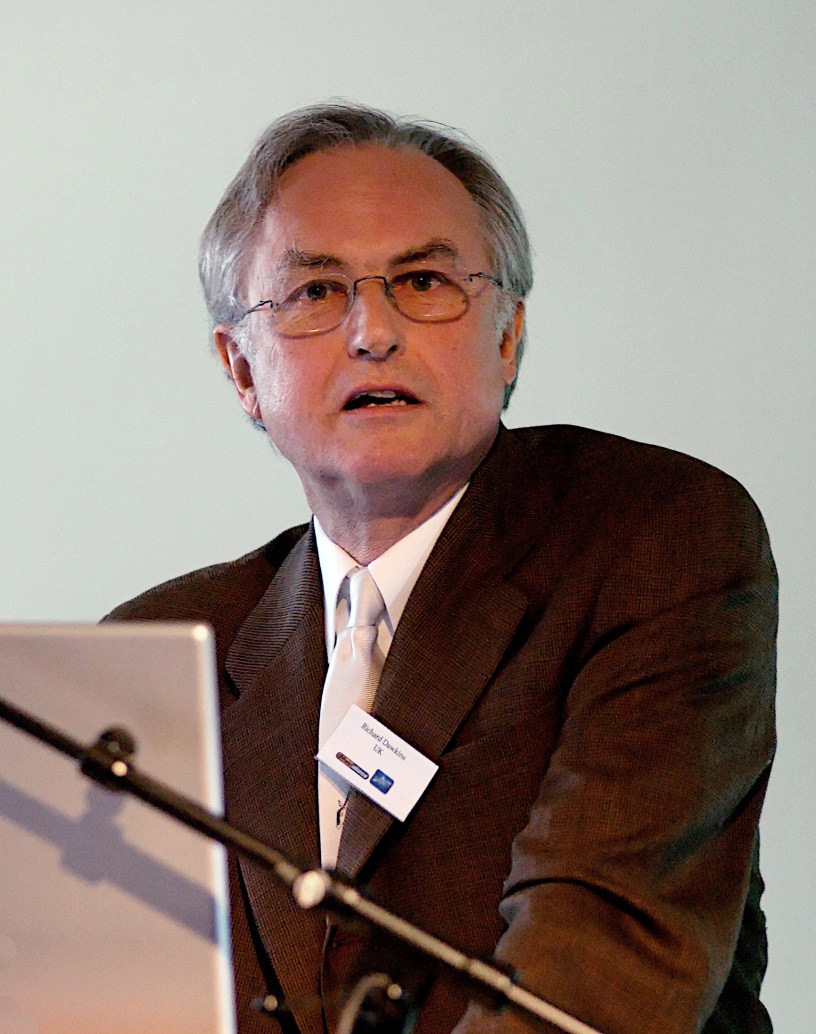
Richard Dawkins has accused the prestigious scientific journal Nature of forsaking science in favor of social justice, endorsing a letter from Chemistry Professor Anna Krylov that charges the publication with engaging in social engineering. From the London Times:
A leading scientific journal has defended its efforts to boost the diversity of researchers cited in its pages after an academic accused it of abandoning science to pursue a “social justice agenda”.
The criticism of Springer Nature group, which publishes the journal, was made by Anna Krylov, an American professor who has been a supporter of President Trump’s drive to stop American universities from promoting diversity, equality and inclusion (DEI) in their admissions policies.
Richard Dawkins, the British evolutionary biologist, backed Krylov and said that too many journals were “favouring authors because of their identity group rather than the excellence and importance of their science”.
The Nature group has said that seeking to include a broad range of perspectives from “a wider spectrum” of researchers can create “a more informed foundation for scholarly work”.
Krylov, a chemistry professor at the University of Southern California (USC), said she had been invited to act as a peer-reviewer — a scientist asked to provide independent scrutiny — of a study being published in the journal Nature Communications.
In an open letter to bosses at Springer Nature, she said the topic was “within my field of expertise” and that she would “normally welcome the opportunity”, but asked if she had been contacted “because of my expertise in the subject matter or because of my reproductive organs”.
Krylov cited a pledge from Springer Nature in 2019 to “take action to improve diversity and inclusion” in their journals, asking editors to “intentionally and proactively reach out to women researchers”.
She cited guidance from the Nature Human Behaviour journal from 2022 that suggested some research should not be published if there is a risk that it “undermines the dignity or rights of specific groups”.
She also cited the use of “citation diversity statements”, where scientists can include in their studies a declaration pledging to cite research “in a manner that is equitable in terms of racial, ethnic, gender and geographical representation”.
Many research bodies have said the drive to boost diversity in academia is not born out of tokenism or political correctness. A report in 2022 by UK Research and Innovation said that ensuring scientific studies were not overwhelmingly produced by people from any one background was “essential to achieving high quality scientific outputs” and to making sure that “research findings are … relevant and address the needs of different communities”.
You can read the rest here.
PHOTO CREDIT: Pixabay By Matthias Asgeirsson from Iceland – Richard Dawkins on Flickr, CC BY-SA 2.0, https://commons.wikimedia.org/w/index.php?curid=2198481
 Green Jihad